
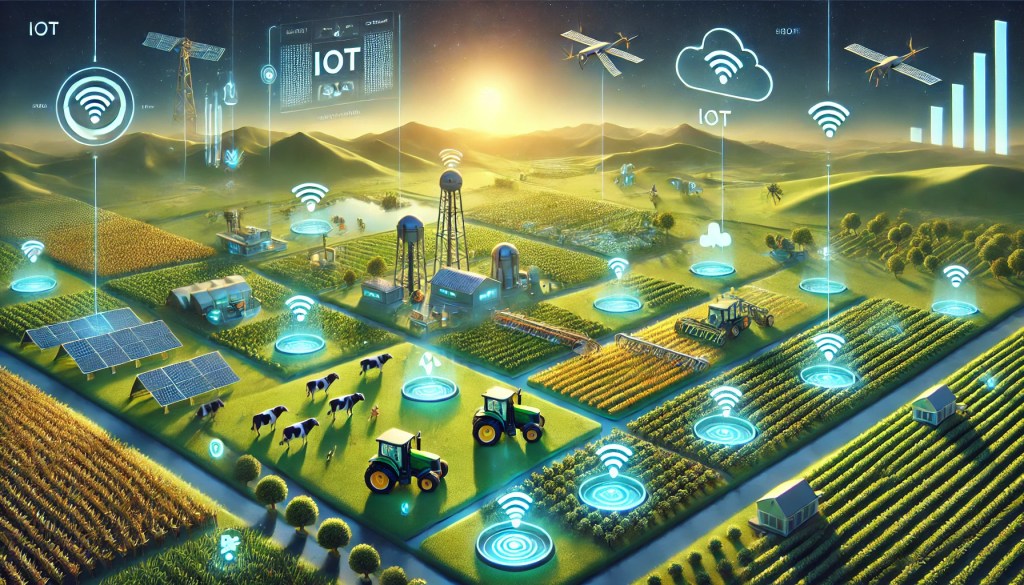
In today’s rapidly advancing IoT landscape, one sector stands out as a key beneficiary of connected technologies: agriculture. The global need for more efficient, sustainable farming practices has never been greater, and IoT (Internet of Things) solutions are stepping in to help farmers meet these demands. By leveraging sensor-driven data, connected machinery, and real-time analytics, farmers are achieving unprecedented levels of productivity, precision, and environmental stewardship.
The Shift Toward Smarter Farming
IoT-powered smart agriculture refers to the integration of connected devices and data-driven approaches into traditional farming methods. By embedding sensors in fields, tractors, irrigation systems, and even livestock collars, farmers can collect detailed information about their operations. This data provides valuable insights into soil health, crop performance, weather patterns, equipment status, and animal welfare. Instead of relying solely on intuition or historical trends, farmers can now make well-informed decisions that optimize yields, conserve resources, and improve overall efficiency.
Key IoT Technologies Driving Smart Agriculture
1. Soil and Environmental Monitoring
Advanced IoT sensors deployed in fields continuously measure soil moisture, temperature, nutrient levels, and pH. This granular data allows farmers to tailor irrigation and fertilization schedules to specific areas, ensuring crops receive precisely what they need to thrive. By reducing overwatering and over-fertilizing, these technologies help conserve water, lower input costs, and promote healthier, more productive fields.
2. Livestock Health and Behavior Tracking
IoT-enabled collars and tags attached to cattle, sheep, and poultry monitor their movement, feeding patterns, and health metrics. Farmers receive alerts if an animal shows signs of illness, has stopped eating, or has wandered into restricted areas. Early detection of health issues prevents disease outbreaks, reduces veterinary costs, and improves animal welfare. Additionally, these devices help optimize breeding schedules and manage herd performance more effectively.
3. Precision Agriculture with Drones and Autonomous Equipment
Unmanned aerial vehicles (UAVs) equipped with multispectral cameras and IoT connectivity are becoming essential tools in precision agriculture. Drones can quickly survey large fields, detect crop stress, assess nutrient deficiencies, and identify pest infestations. By analyzing aerial imagery, farmers can act quickly to address problems, apply treatments only where needed, and reduce chemical usage. Autonomous tractors and harvesters, guided by IoT systems and GPS, further increase efficiency by reducing labor costs and ensuring consistent performance across large-scale operations.
4. IoT in the Supply Chain
Beyond the farm, IoT is transforming the agricultural supply chain. Connected sensors in shipping containers, storage facilities, and distribution centers monitor temperature, humidity, and product freshness. Real-time tracking ensures that produce stays within optimal conditions during transit, minimizing spoilage and waste. Retailers and consumers benefit from improved transparency, better-quality products, and more accurate information about the origin and handling of their food.
The Growing Importance of Smart Agriculture
Several global factors are driving the need for IoT-powered smart agriculture. Climate change is disrupting weather patterns and altering growing seasons, making traditional farming methods less predictable. Water scarcity in many regions is pushing farmers to adopt more precise irrigation techniques. Additionally, the world’s population is expected to reach nearly 10 billion by 2050, creating immense pressure to produce more food on limited arable land. Smart agriculture solutions help farmers address these challenges by increasing yields, reducing waste, and improving resilience to environmental shocks.
Economic and Environmental Benefits
Adopting IoT technologies can lead to significant cost savings for farmers. By optimizing resource usage—such as water, fertilizer, and pesticides—farmers reduce input costs while maintaining or even improving yields. IoT-enabled predictive maintenance on equipment lowers repair costs and minimizes downtime, further boosting profitability. From an environmental perspective, precision agriculture reduces the carbon footprint of farming by lowering energy consumption, cutting down on chemical runoff, and supporting more sustainable land management practices.
Challenges to Adoption
Despite its potential, the widespread adoption of IoT in agriculture is not without obstacles. Many rural areas lack the reliable connectivity needed to fully implement IoT systems, limiting access to real-time data. Small and medium-sized farms may find the initial investment in sensors, drones, and connected machinery prohibitively expensive. Interoperability between different IoT devices and platforms remains a challenge, as does the standardization of data formats and protocols. Additionally, ensuring data security and protecting farmers’ sensitive information are ongoing concerns that need to be addressed.
Looking Toward the Future
As IoT technology continues to evolve, the future of farming is poised to become even more intelligent and efficient. Emerging advancements, such as artificial intelligence and machine learning, will enhance the analytical capabilities of IoT systems, providing deeper insights and more accurate predictions. The integration of blockchain technology into the agricultural supply chain will improve traceability and ensure the authenticity of food products. At the same time, government initiatives and private sector partnerships are working to expand rural connectivity, lower the costs of IoT adoption, and promote education and training programs for farmers.
Conclusion
Smart agriculture powered by IoT is more than just a trend—it’s a vital step forward in meeting the challenges of feeding a growing global population while preserving natural resources. By enabling precision farming, improving animal welfare, enhancing supply chain transparency, and reducing environmental impacts, IoT technology is reshaping the agricultural industry. As these solutions become more accessible and affordable, farmers around the world will be able to achieve greater efficiency, sustainability, and profitability. Today, the seeds of smart agriculture are being sown, and the future harvest promises a more connected, productive, and sustainable world.
contact us for all your iOT needs thaila@kksmartlocks.com
1. #SmartAgriculture
2. #IoTInFarming
3. #PrecisionFarming
4. #ConnectedFarms
5. #IoTForAgriculture
6. #SmartFarming
7. #IoTInnovation
8. #Agritech
9. #IoTSolutions
10. #AgTechInnovation
11. #IoTDevices
12. #FarmTechnology
13. #SmartFarmers
14. #DigitalFarming
15. #IoTApplications
16. #TechInFarming
17. #IoTForGood
18. #FarmAutomation
19. #IoTInnovationInFarming
20. #FutureOfAgriculture
 Kk Smart Living
Leave a comment